How to Use Buddhist Prayer Beads (How to Use Mala)
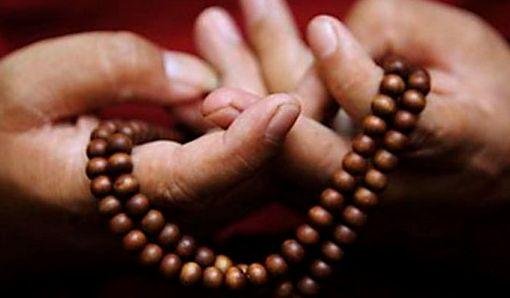
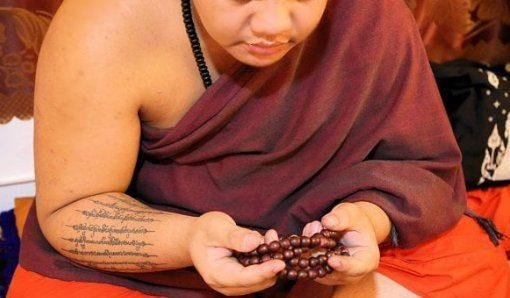
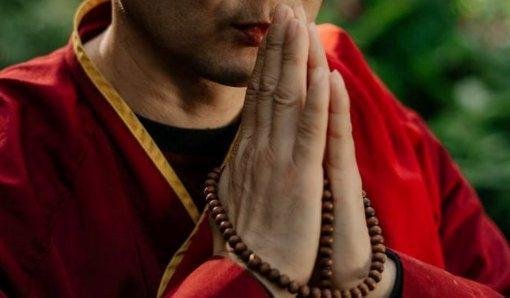
Buddhist prayer beads, also called mala beads, are traditionally used to count mantras, prayers, chants or breaths during meditation and Buddhist practice. A traditional mala commonly has 108 counting beads, allowing you to complete a set number of repetitions without having to keep count in your mind.
Using a mala is simple. Hold the beads comfortably in one hand, begin with the bead next to the guru bead, repeat your chosen mantra or count your breath, and move one bead for each repetition. Continue around the mala until you reach the guru bead again.
If you want to continue your practice, turn the mala around and begin moving through the beads in the opposite direction rather than passing over the guru bead.
There is no need to make the practice complicated. The purpose of the beads is to help you maintain attention on your meditation, mantra or prayer rather than on counting.
A Buddhist Prayer Mala Bead Necklace is a string of 108 prayer beads that when used in meditation is primarily for counting mantras or breaths taken. Often times they will break during use and will need to be restrung.
Understanding Buddhist Prayer Beads: A Gateway to Inner Peace
Buddhist prayer beads, often referred to as “mala beads,” have been an integral part of Buddhist traditions for centuries. These sacred beads serve as a powerful tool to enhance meditation, prayer, and mindfulness. Each bead holds symbolic importance and aids practitioners in counting and focusing their breaths or mantras.
In this step by step guide with pictures we will discuss the use of Buddhist Prayer Beads/Mala. The process of counting a string of 108 Mala Beads in a Necklace is exactly the same be it Buddhist Mala, Tibetan Mala or Yoga Mala. Mala beads, commonly known as a Japa mala or simply a mala, are a type of prayer beads that have been used for centuries by a range of religions. The terms Buddhist Prayer Beads, Mala Beads or Buddha Beads are all used to describe the classic form of a 108 Bead Necklace.
Quick Reference - Table of Contents
ToggleHow to Use Your Mala Beads
How to Use Buddhist Prayer Beads: Quick Guide
The basic process is:
- Find a quiet and comfortable place.
- Hold your mala in the hand that is appropriate for your tradition or most comfortable for you.
- Find the guru bead.
- Begin with the bead immediately next to the guru bead.
- Recite one mantra, prayer or count one breath.
- Move one bead with your thumb.
- Repeat until you return to the guru bead.
- Stop, or turn the mala around and continue in the opposite direction.
A full circuit of a traditional 108-bead mala represents 108 repetitions. The guru bead is normally not counted as one of the 108.
Preparation for For Meditation Using Mala
Mala beads is a beautifully rhythmic and meditative practice. First a step by step guide to the overall process of using Buddhist Mala for meditation:
- Set Your Intention: Before you begin, take a moment to set your intention or prayer. What do you seek to cultivate during this meditation?
- Find Your Seat: Sit comfortably in a quiet space. Hold your mala with your right hand, draped over your middle finger, and let it rest on your middle finger.
- Begin the Meditation: Starting at the guru bead (the larger central bead), gently press the bead between your thumb and middle finger. With each inhale and exhale, recite your chosen mantra, affirmation, or prayer.
- Counting Beads: After completing one full cycle of your mantra, move to the next bead by gently pulling it towards you. Continue until you reach the guru bead again.
- Closing the Meditation: To conclude your meditation, pause when you reach the guru bead once more. Take a moment to express gratitude and reflect on your practice.
How to Use Your Mala Beads - Step by Step Guide

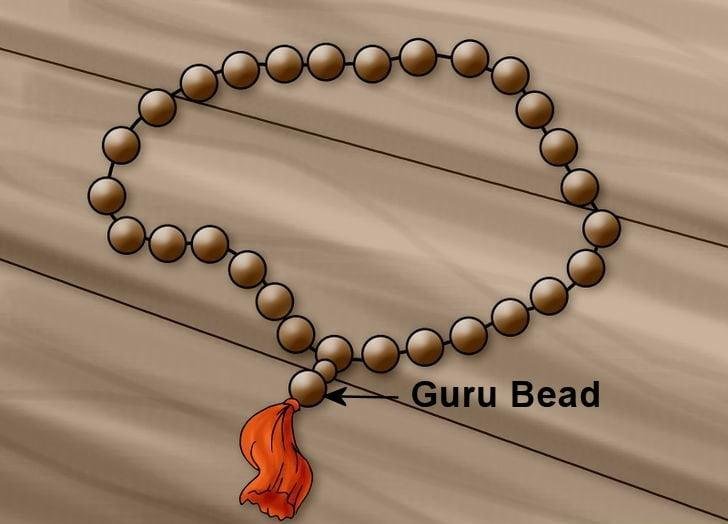
1) Identify the Guru Bead
First Identify the guru bead. The guru bead, will hang off the counting beads at the middle bottom of the Mala Necklace. The guru bead is intended to be used as a place of rest and contemplation during meditations and mantra recitations. Monk Mala will have Guru beads that are connected to a tassel.
The guru bead will be where you begin and end your meditation or mantra.
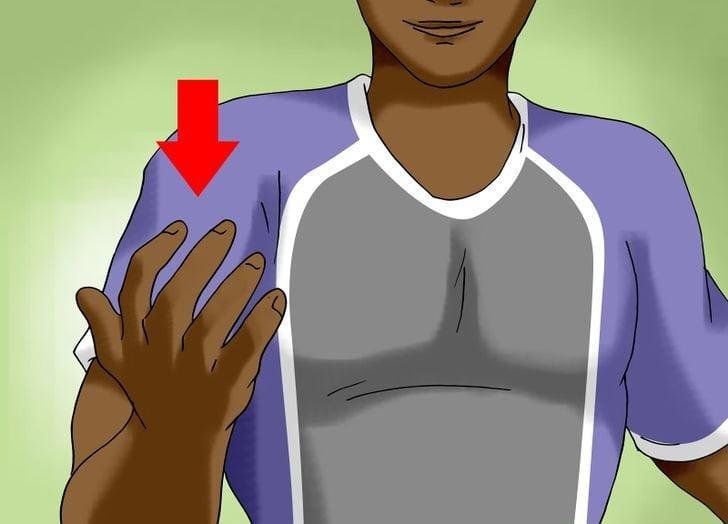
2) Chose your Preferred Hand
Place the Prayer Beads Mala in your hand of choice. Some cultures use the left hand for toilet cleanup and it is consider impure, so they use the right hand. However, there are many other cultures and traditions that do not specify in which hand you need to place the mala. If the tradition of meditation you are using specifies a hand for counting it is best to use that hand. Otherwise use what is most comfortable for you.

3) Chose your Preferred Fingers
Hang the mala beads on your third finger. Place your Prayer Beads Mala on your third, or ring, finger before you begin reciting mantras or meditating. The third finger has a symbolic significance in many Buddhist traditions. However placing the mala on your third finger will also allow you to efficiently cycle through the mala throughout. There is however no best way of how to use Buddhist Prayer Beads with your meditation and mantra recitations.

How to Use Mala Beads for Counting Mantra
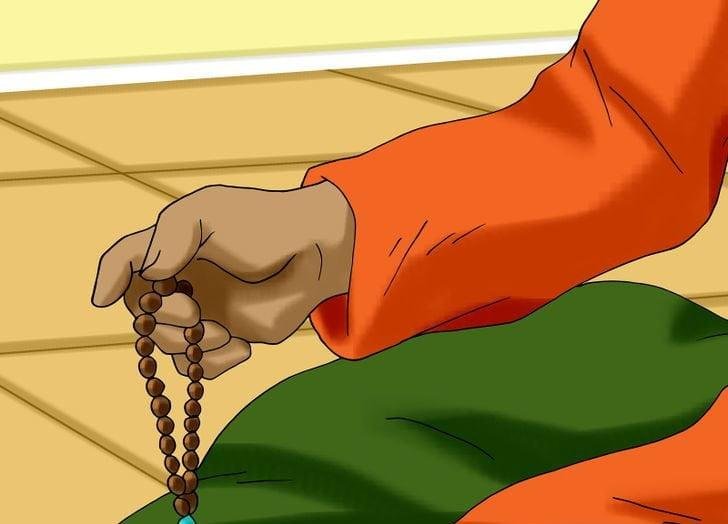
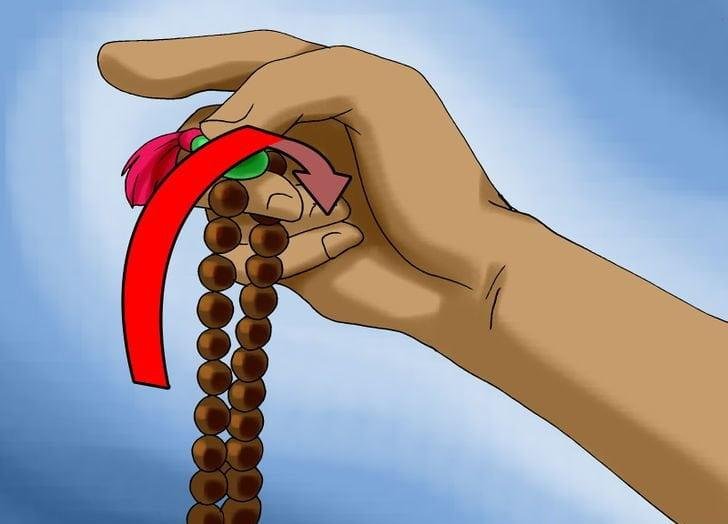
4) Use your Thumb to Rotate and Count the Mala
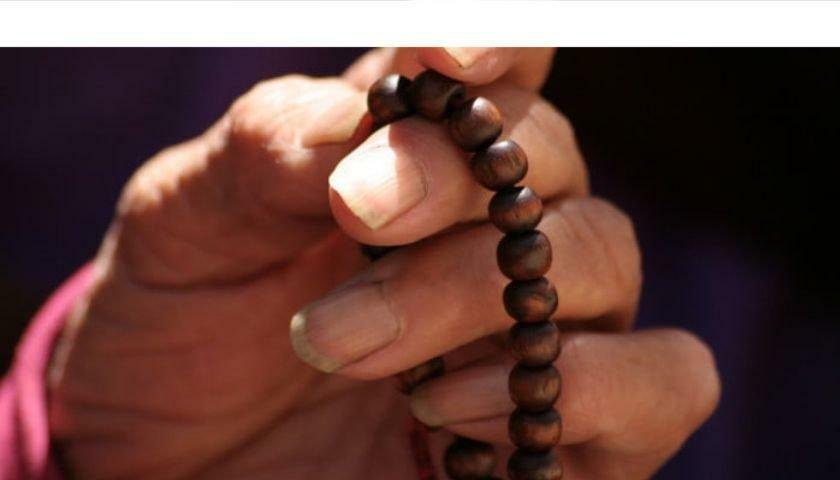
Using your thumb to rotate through each bead and then count each mantra or breathe. Your thumb should allow you to easily move through each bead that is held by one of your fingers. Using your thumb to pull each bead toward you and cycle through your Prayer Beads until you reach the Guru Bead.
The most common approach is …..
- Place the mala comfortably in your hand and hold the first counting bead between your thumb and the finger you are using to support the mala.
- You do not need to grip the bead tightly.
- The beads should be able to move easily through your fingers.
- A relaxed grip is generally better than holding the mala tightly because the physical movement should become smooth and rhythmic as your meditation continues.
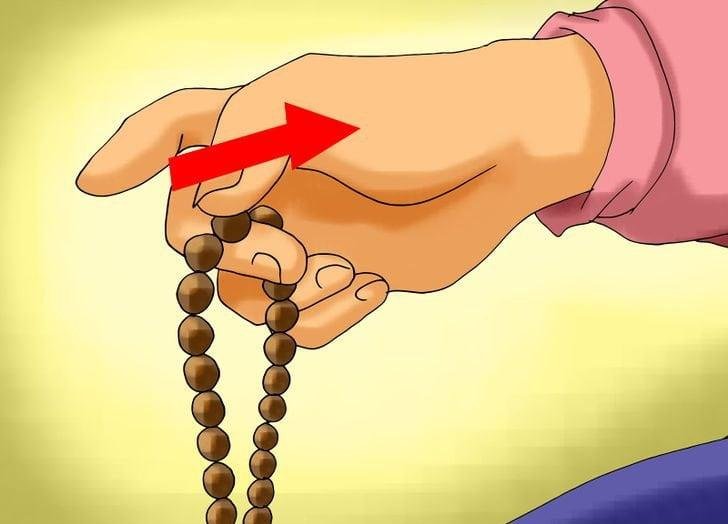
5) Rotate the Mala and Recite One Mantra Per Bead
If you are using a mala for mantra meditation, recite your chosen mantra once while holding the first bead.
The mantra can be recited:
Silently
Quietly
Aloud
The appropriate method depends on the tradition and the type of practice.
Once you have completed the repetition, use your thumb to move that bead away and bring the next bead into position.
That next bead represents the next repetition.
The basic rhythm is therefore:
One mantra → one bead → move to the next bead.
6) Continue Until You Reach the Guru Bead
Continue moving through the mala, one bead for each repetition. With a traditional 108-bead mala, you will eventually arrive back at the guru bead after completing 108 counting beads. The guru bead is normally not counted. When you reach it, you have completed one full round of the mala.
You can then choose to:
End your meditation
Pause for a moment
Dedicate your practice
Begin another round
7) How to Continue Beyond 108 Beads
If you want to complete more than one round, do not simply pass over the guru bead. Instead, turn the mala around and begin moving through the beads in the opposite direction. The guru bead remains the marker between one round and the next. This means that each complete circuit contains the same number of counting beads, while the guru bead remains outside the count.
The practice of turning the mala rather than crossing over the guru bead is common in several mala traditions, although the exact symbolism and instructions vary between Buddhist schools.
Image Source Acknowledgement: This article “How to use Buddhist Prayer Beads” has been adapted from, and images used from Wikihow
How to Use Mala Beads for Different types of Mediation
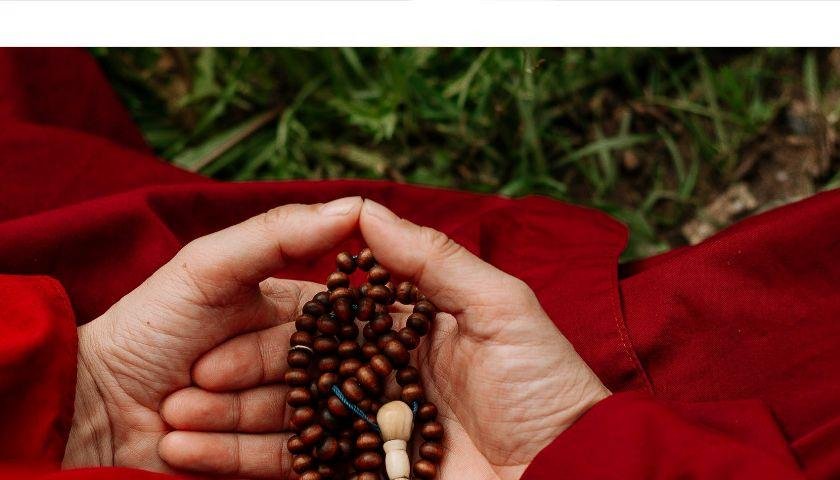
How to Use Mala Beads for Mantra Meditation
Mantra meditation is one of the most common reasons people use a mala.
The basic method is simple:
Choose a mantra → begin with the bead next to the guru bead → repeat the mantra once → move one bead → repeat.
The mala allows you to concentrate on the mantra rather than mentally keeping track of how many repetitions you have completed.
For example, if your Buddhist practice includes a particular mantra taught by your teacher, you can repeat that mantra once for each bead.
If you have received specific instructions from a Buddhist teacher about a mantra, follow those instructions rather than substituting a different practice.
The purpose of the mala is to support the practice, not to replace the teachings or instructions associated with it.
How to Use Buddhist Prayer Beads for Breath Meditation
You do not have to use a mantra to meditate with a mala.
The beads can also be used to count breaths.
Begin with the bead next to the guru bead.
Take one comfortable breath, counting one bead.
Then move to the next bead and repeat.
A simple pattern is:
One complete breath → one bead → next bead.
A complete breath can mean one inhalation and exhalation, rather than counting the inhale and exhale as separate repetitions.
There is no need to force your breathing to become unusually slow or deep. Allow the breath to remain natural and comfortable.
The beads simply provide a physical way to keep track.
Using a Mala for Mindfulness
Mala beads can also be used without a formal mantra.
The movement of the beads provides something physical for your attention to return to whenever your mind wanders.
You might focus on:
- The texture of each bead
- The movement of the thumb
- The sound or repetition of a mantra
- The sensation of breathing
- The meaning of a prayer or phrase
When you notice that your attention has wandered, simply return your attention to the next bead and continue.
The goal is not to prevent every thought from appearing. The practice is to recognise distraction and gently return your attention.
A Simple 5-Minute Mala Meditation for Beginners
If you have never used a mala before, you can begin with a very simple practice.
1. Sit comfortably.
Choose a quiet place and allow your body to settle.
2. Hold your mala.
Find the guru bead and begin with the bead next to it.
3. Take a breath.
Allow your breathing to become natural.
4. Choose one focus.
You can use a mantra, prayer or simply your breath.
5. Move one bead.
Complete one mantra or one comfortable breath, then move to the next bead.
6. Continue slowly.
Allow your attention to remain with the practice.
7. Return when distracted.
If your mind wanders, notice it and gently return to the next bead.
8. Finish when you are ready.
When you reach the guru bead, pause for a moment before putting the mala away.
You do not have to complete all 108 beads during your first meditation.
Useful Tips and Tricks for using Mala Prayer Beads
What Happens When Your Mind Wanders?
It is completely normal for your mind to wander during meditation. You may start thinking about work, family, plans, conversations or other everyday concerns. When you notice this happening, you do not need to become frustrated. Simply return your attention to the mantra, breath or sensation of the bead in your hand.
The mala gives you a physical sequence to return to:
Bead → mantra or breath → next bead.
This simple repetition can make meditation easier for people who find it difficult to sit still and focus only on their breath.
Do You Have to Use a Mantra?
No.
A traditional mala is often used for mantra recitation, but it can also be used for breath counting, chanting, prayer or other forms of repetitive meditation. If you are practising within a particular Buddhist tradition, it is best to follow the instructions of your teacher. If you are simply learning how mala meditation works, you can begin with something as simple as counting one comfortable breath per bead. The important part is to use the beads as a support for attention rather than becoming overly concerned about performing the technique perfectly.
What Does 108 Mean When Using a Mala?
A traditional long mala commonly contains 108 counting beads. The number 108 has several interpretations across Buddhist and Indian religious traditions, and there is no single explanation accepted by every Buddhist school. For the practical purpose of meditation, the important point is that 108 beads provide a complete counting cycle. One bead can represent one mantra, prayer or breath.
When you return to the guru bead, you know that you have completed one full round. Shorter malas are also available. For example, 54 beads represent half of 108 and 27 beads represent one quarter.
Can You Use a Mala With More Than One Mantra?
Yes, but if you are following a formal Buddhist practice, the mantra and number of repetitions may be prescribed by your teacher. For general meditation, there is no requirement to change mantras repeatedly during a single round. It is usually easier for beginners to choose one practice and remain with it for the duration of the meditation. Consistency helps establish a rhythm and makes it easier to keep your attention on the practice.
Should You Count the Guru Bead?
Generally, no.
The guru bead marks the beginning and end of a complete cycle and is separate from the 108 counting beads. When you reach it, stop and decide whether you want to finish or begin another round. If you continue, turn the mala around and count back in the opposite direction.
Does It Matter Which Direction You Move the Beads?
The important point is to follow the method appropriate to your tradition. For the common mala-counting method described here, you move through the beads one at a time until reaching the guru bead, then reverse direction rather than crossing over it. The exact terminology and symbolism associated with this practice differ between Buddhist and Hindu traditions, so it is better not to treat one explanation as universal.
How Long Should You Meditate With a Mala?
There is no required amount of time. You could begin with:
5 minutes for a simple introduction.
10–15 minutes for a regular meditation session.
One complete 108-bead round if you want to use the traditional counting cycle.
More experienced practitioners may complete several rounds or practise for much longer. The purpose is not to complete the beads as quickly as possible. A slow, attentive practice is generally more useful than rushing through 108 repetitions simply to finish the cycle.
Common Mistakes When Using Buddhist Prayer Beads
Starting on the Guru Bead
The guru bead is normally a marker rather than a counting bead.Begin with the bead immediately next to it.
Counting the Guru Bead
The guru bead is generally not included in the 108-count.
Crossing Over the Guru Bead
If you want to continue for another round, turn the mala around and move in the opposite direction.
Holding the Mala Too Tightly
The beads should move easily through your fingers. A relaxed grip makes the practice more comfortable.
Moving Too Quickly
There is no prize for completing a mala quickly. The purpose of the beads is to support concentration and repetition.
Worrying About Perfect Technique
Different Buddhist traditions have different instructions regarding hands, fingers, mantras and other aspects of mala practice. If you are following a particular lineage, follow its instructions. If you are practising general meditation, focus on developing a steady and comfortable rhythm.
How Should You Care for Buddhist Prayer Beads?
A mala can last for many years if it is treated carefully. Keep your mala somewhere clean and dry when you are not using it.
Protect the Cord
The cord is often the part of a mala most vulnerable to wear. Avoid pulling the beads sharply or stretching the strand unnecessarily. If you wear your mala as a necklace, consider removing it before sleeping, swimming or bathing.
Keep Wooden Beads Dry
Wood can absorb moisture and oils. Avoid soaking a wooden mala in water. If it needs cleaning, gently wipe the beads with a soft, slightly damp cloth and allow them to dry naturally.
Caring for Seed Beads
Natural seed beads can also be affected by prolonged exposure to water and humidity. Keep them dry and avoid unnecessary soaking.
What If Your Mala Breaks?
A broken mala does not necessarily have a spiritual meaning. Mala cords eventually wear out, particularly when the beads are used frequently or worn as a necklace. A broken mala can often be restrung. For Buddhist practitioners, restringing the beads can also provide an opportunity to reflect on the practice and intention associated with the mala.
Frequently Asked Questions About Using Buddhist Prayer Beads
How do you use Buddhist prayer beads?
Hold the mala comfortably, begin with the bead next to the guru bead, repeat one mantra or prayer per bead, and move one bead at a time with your thumb. Continue until you return to the guru bead. If you want another round, turn the mala around and continue in the opposite direction.
Which hand should hold Buddhist prayer beads?
The appropriate hand varies between Buddhist traditions and lineages. Some traditions traditionally use the right hand, while others allow different methods. If you have received instructions from a Buddhist teacher, follow them. Otherwise, use the hand that allows you to handle the mala comfortably.
Which fingers should I use with a mala?
A common method is to rest the mala over the middle finger and use the thumb to move each bead. Some traditions avoid using the index finger. There are different practices, so follow the instructions of your Buddhist tradition if you have them.
Do I have to use a mantra with a mala?
No. Mala beads can also be used to count breaths, prayers, chanting or other repeated meditation practices.
How many times do you repeat a mantra with a mala?
A traditional 108-bead mala provides 108 counting positions for one round. However, the number of repetitions required depends on the particular mantra and Buddhist practice. Some practices call for multiple rounds.
Do you count the guru bead?
Generally, the guru bead is not counted. It marks the beginning and end of the 108-bead counting cycle.
What do you do when you reach the guru bead?
Stop and pause, or turn the mala around and continue in the opposite direction if you want to complete another round. The guru bead is normally not crossed during counting.
Can I use a mala for breathing meditation?
Yes. You can use one bead for each complete breath, moving to the next bead after each breath. Allow your breathing to remain natural rather than forcing it.
Can I use Buddhist prayer beads if I am not Buddhist?
Yes. People from many backgrounds use malas for meditation and breath counting. If you use Buddhist prayer beads, it is respectful to understand their religious and cultural origins.
How long should I use a mala each day?
There is no universal requirement. Five or ten minutes is enough to begin developing a regular practice. You can gradually increase the time or complete a full 108-bead round if that suits your practice.
Can Buddhist prayer beads break?
Yes. Mala cords experience normal wear and can eventually break, particularly when the beads are frequently worn or handled. A broken mala does not necessarily have a spiritual meaning and can often be restrung.
Find your Perfect Buddhist Mala